


Oscar Wilde: Biography, Works & Legacy
Oscar Wilde (1854–1900) was an Irish poet, playwright, novelist, essayist, and cultural critic whose wit, aesthetic philosophy, and dramatic personal life made him one of the defining figures of the late Victorian era—and, in retrospect, a vital midwife to modernity. Born Oscar Fingal O’fflahertie Wills Wilde in Dublin on October 16, 1854, to prominent Anglo-Irish intellectuals Sir William Wilde, a renowned surgeon and antiquarian, and Jane Francesca Elgee ("Speranza"), a revolutionary poet and folklorist, Wilde grew up in a lively literary salon. Educated at Portora Royal School, Trinity College Dublin, and Magdalen College, Oxford, he distinguished himself as a brilliant classicist while emerging as a leading apostle of the Aesthetic Movement and its credo of "art for art’s sake."
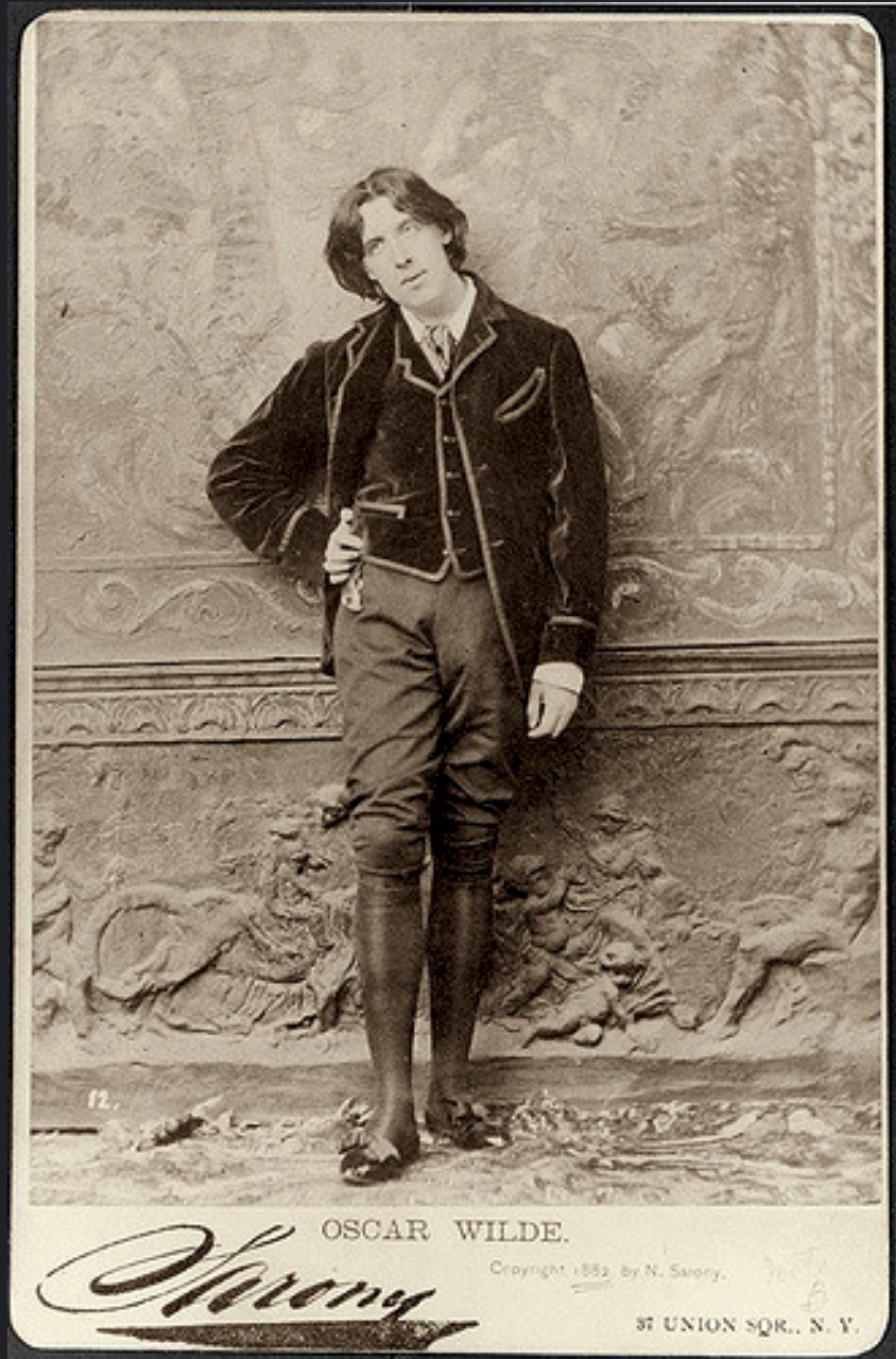
Before achieving theatrical triumph in London, Wilde forged his public persona across the Atlantic. In January 1882, he arrived in New York aboard the S.S. Arizona to embark on an ambitious 1882 American lecture tour spanning the United States and Canada. Far more than a publicity stunt, his North American sojourn saw crucial Wildean firsts: he delivered 141 lectures on decorative art, mastered the modern press interview, sat for Napoleon Sarony’s iconic portraits that permanently fixed his visual image, and mounted the world premiere of his first staged play, Vera; or, The Nihilists, in New York in August 1883. Having pioneered modern celebrity and gathered a trove of verified American quotations and historical ephemera documented in the Oscar Wilde in America archive, Wilde returned to Britain famous for far more than merely being famous.
In 1884, Wilde married Constance Lloyd, with whom he had two sons, Cyril and Vyvyan, and settled on Tite Street in Chelsea. Supporting his family through journalism and as editor of The Woman’s World (1887–1889), he proved himself a serious progressive thinker on art, society, and clothing. Through his 1885 essay "The Philosophy of Dress" and lectures on rational fashion—examined in depth in Oscar Wilde on Dress—Wilde championed freedom of movement and artistic utility alongside his famous dandyism.
From 1888 to 1895, Wilde created his defining literary works—including fairy tales, The Picture of Dorian Gray (1890), critical dialogues (Intentions, 1891), Salomé, and his hit West End comedies like The Importance of Being Earnest (1895), with further texts cataloged in Oscar Wilde’s Selected Works.
At the height of his fame in 1895, his involvement with Lord Alfred Douglas triggered a disastrous legal clash with Douglas's father, the Marquess of Queensberry. After a failed libel suit, Wilde was convicted of gross indecency and sentenced to two years of hard labor, producing De Profundis and The Ballad of Reading Gaol (1898) before dying in Paris in poverty on November 30, 1900.
After decades of marginalization and a societal "conspiracy of silence," mid-20th-century legal reforms and Richard Ellmann’s 1987 biography restored his stature. Today, he is celebrated globally as a visionary thinker whose legacy is further explored on the Oscar Wilde Blog—including John Cooper’s essay Finding Oscar.